Dark marks after shaving, ingrown hairs or breakouts can remain visible long after the original irritation has disappeared. Treating them effectively requires patience, daily sun protection and a routine that does not create more inflammation.
For men, uneven-looking tone is often concentrated around the beard, jawline, neck and areas repeatedly affected by blemishes. The goal is not to bleach the skin—it is to support a clearer, more even-looking complexion over time.
The Essential Rule
Brightening care without daytime sun protection is an incomplete routine. UV exposure can make existing marks appear darker and more persistent.
Why Do Dark Spots Appear After Shaving or Breakouts?
When skin experiences inflammation—from a blemish, razor irritation, picking or an ingrown hair—it may respond by producing extra pigment in that area. The result is a flat mark that can be brown, grey or darker than the surrounding skin.
This is different from an active spot. Scrubbing the mark aggressively will not remove pigment faster and may create fresh irritation, extending the cycle.
Five Habits That Can Make Uneven Tone Worse
1. Picking or squeezing
More trauma can mean a more visible and persistent mark.
2. Shaving repeatedly over irritation
A blunt blade and excessive pressure can prolong discomfort.
3. Using several exfoliants together
More intensity can lead to irritation rather than faster visible improvement.
4. Skipping moisturiser
Dehydrated skin may feel rougher and look less even.
5. Forgetting SPF
Daily UV exposure works against a brightening routine.
The Ingredients to Know
Vitamin C for overall radiance
Vitamin C provides antioxidant care and supports a brighter, more even-looking complexion. It works well as a face-wide step when dullness accompanies visible marks.
Try the VMEN’S 2% Vitamin C Serum as a lightweight brightening step beneath moisturiser and sunscreen.
Kojic acid for targeted care
Kojic acid is used in cosmetic formulas created to reduce the appearance of dark spots and uneven tone. It should be introduced gradually and used according to the product directions.
The VMEN’S Targeted Dark Spot Care with 1% Kojic Acid is designed for precision application rather than coating the entire face with a strong treatment.
Hydration for a smoother-looking finish
A brightening routine still needs moisturising care. Hydrated skin generally looks smoother and reflects light more evenly.
For treatment and daily moisture in one step, consider the VMEN’S Dark Spot Face Cream with Kojic Acid.
A Practical Morning and Evening Routine
Morning
- Gentle cleanse
- Vitamin C serum
- Moisturiser
- Broad-spectrum SPF
Evening
- Cleanse
- Targeted kojic acid care
- Moisturiser
Do not introduce every brightening product at once. Begin with one treatment and watch how your skin responds. If discomfort develops, reduce frequency or pause use.
A Ready-Made Pairing
Two steps for visible uneven tone.
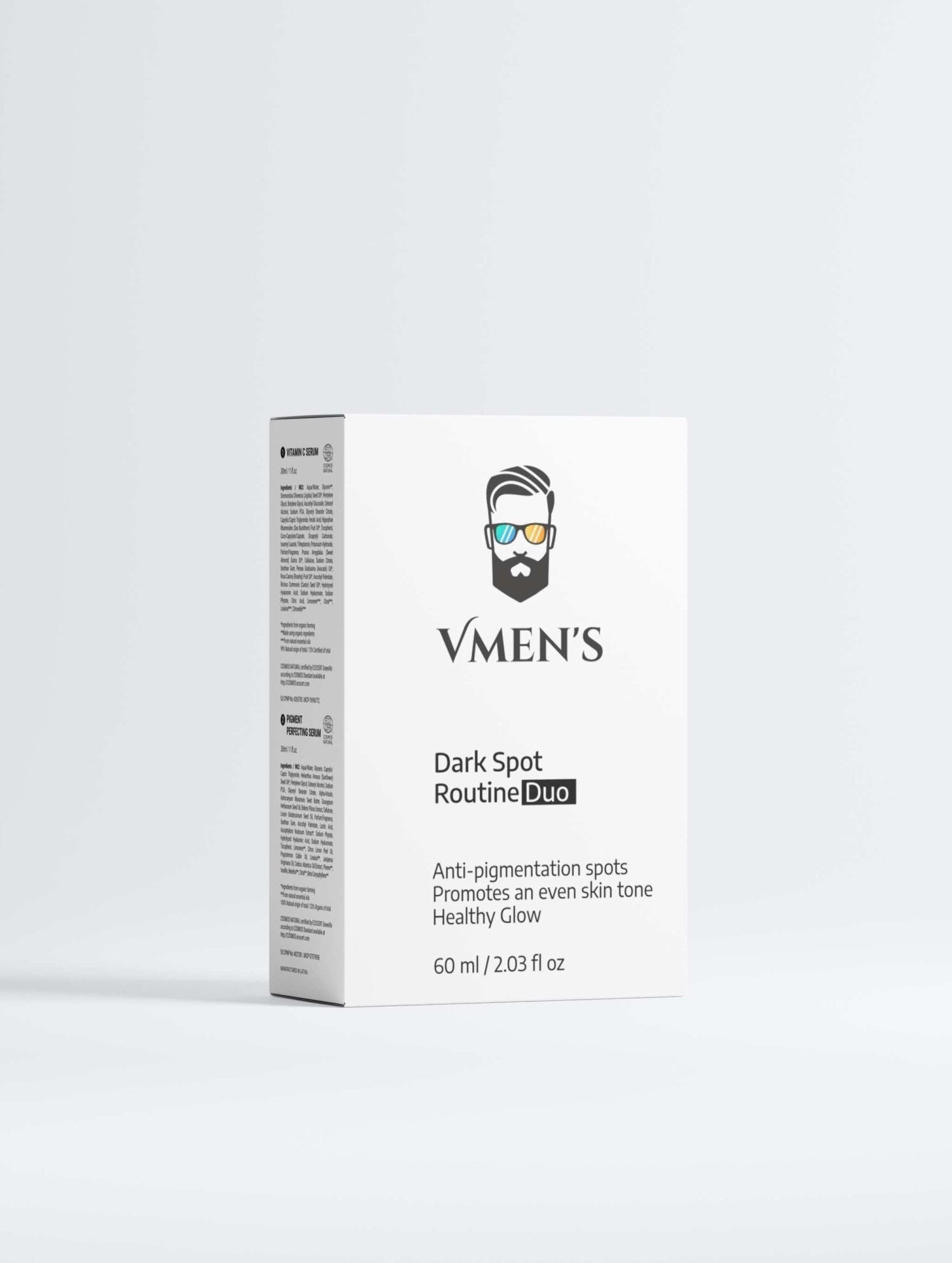
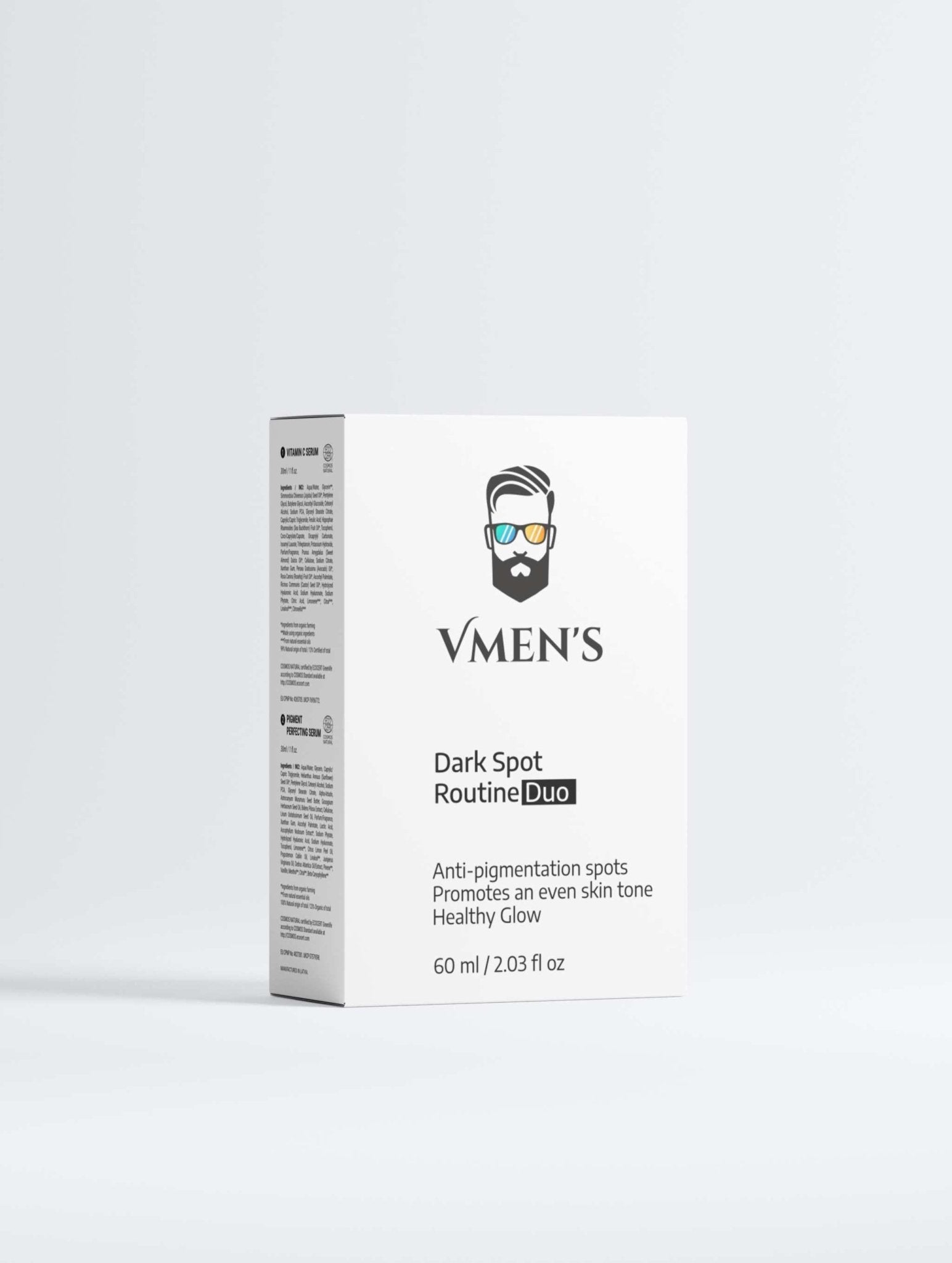
The VMEN’S Dark Spot Routine Duo brings complementary brightening care together in one straightforward routine.
Frequently Asked Questions
How quickly do dark spots fade?
There is no reliable overnight timeline. Appearance depends on the cause, depth of pigment, sun exposure and consistency of care. Photographing the area monthly in the same lighting is more useful than checking it every day.
Can I use kojic acid after shaving?
Freshly shaved or irritated skin may be more sensitive. Allow the skin to feel calm and follow the product directions rather than applying strong treatment immediately after shaving.
Can I use vitamin C and kojic acid in the same routine?
Some routines include both, but sensitive skin may prefer vitamin C in the morning and kojic acid in the evening. Introduce them gradually.
The Takeaway
Correct gently. Protect consistently.
The best dark-spot routine prevents new irritation while supporting gradual improvement in visible tone.