Men’s Skincare Guide
Exfoliation for Men: When, How, and What to Use for Healthier Skin
A practical guide to men’s exfoliation, including how often to exfoliate, the difference between AHA peels and face scrubs, and how to use them correctly for smoother, clearer-looking skin.
Most men wash their face, but many skip one of the most important steps in a proper skincare routine: exfoliation.
Dead skin cells naturally build up on the surface of the skin. When they are not removed, skin can start to look dull, rough, congested, and uneven. This buildup can also make it harder for serums and moisturisers to absorb properly.
In this guide, we explain when men should exfoliate, how to do it correctly, and which exfoliation methods work best depending on your skin and routine.
Why Exfoliation Matters for Men’s Skin
Men’s skin is generally thicker, produces more oil, and is often exposed to additional stress from shaving. As a result, dead skin buildup, clogged pores, and uneven texture are common concerns in male skin.
Regular exfoliation helps remove surface buildup and improves how the skin looks and feels. It also supports better absorption of the products applied afterwards.
Key Benefits
- Helps unclog pores
- Smooths rough skin texture
- Reduces buildup around the beard area
- Improves skin brightness and clarity
- Helps serums and moisturisers absorb more effectively
How Often Should Men Exfoliate?
For most men, exfoliating 1 to 2 times per week is enough. The goal is to remove dead skin consistently without over-stressing the skin barrier.
| Skin Type | Recommended Frequency |
|---|---|
| Normal skin | 1–2 times per week |
| Oily or congested skin | Up to 2 times per week |
| Sensitive skin | Once per week |
| Dry skin | Once per week, gently |
Exfoliating too often can lead to irritation, dryness, and a weakened skin barrier. More is not better here.
The Two Main Types of Exfoliation
In modern men’s skincare, exfoliation usually falls into two categories: chemical exfoliation and physical exfoliation.
1. Chemical Exfoliation: AHA Peel
AHA stands for Alpha Hydroxy Acid. This type of exfoliation works by helping loosen and dissolve dead skin cells on the surface, so skin looks smoother and more refined over time.
AHA exfoliation is often a strong option for men dealing with dullness, uneven skin tone, or rough texture, especially when they want visible results without aggressive scrubbing.
- Helps improve skin texture
- Supports a brighter-looking complexion
- Can help skin feel smoother and more even
- Works well in performance-focused skincare routines for men
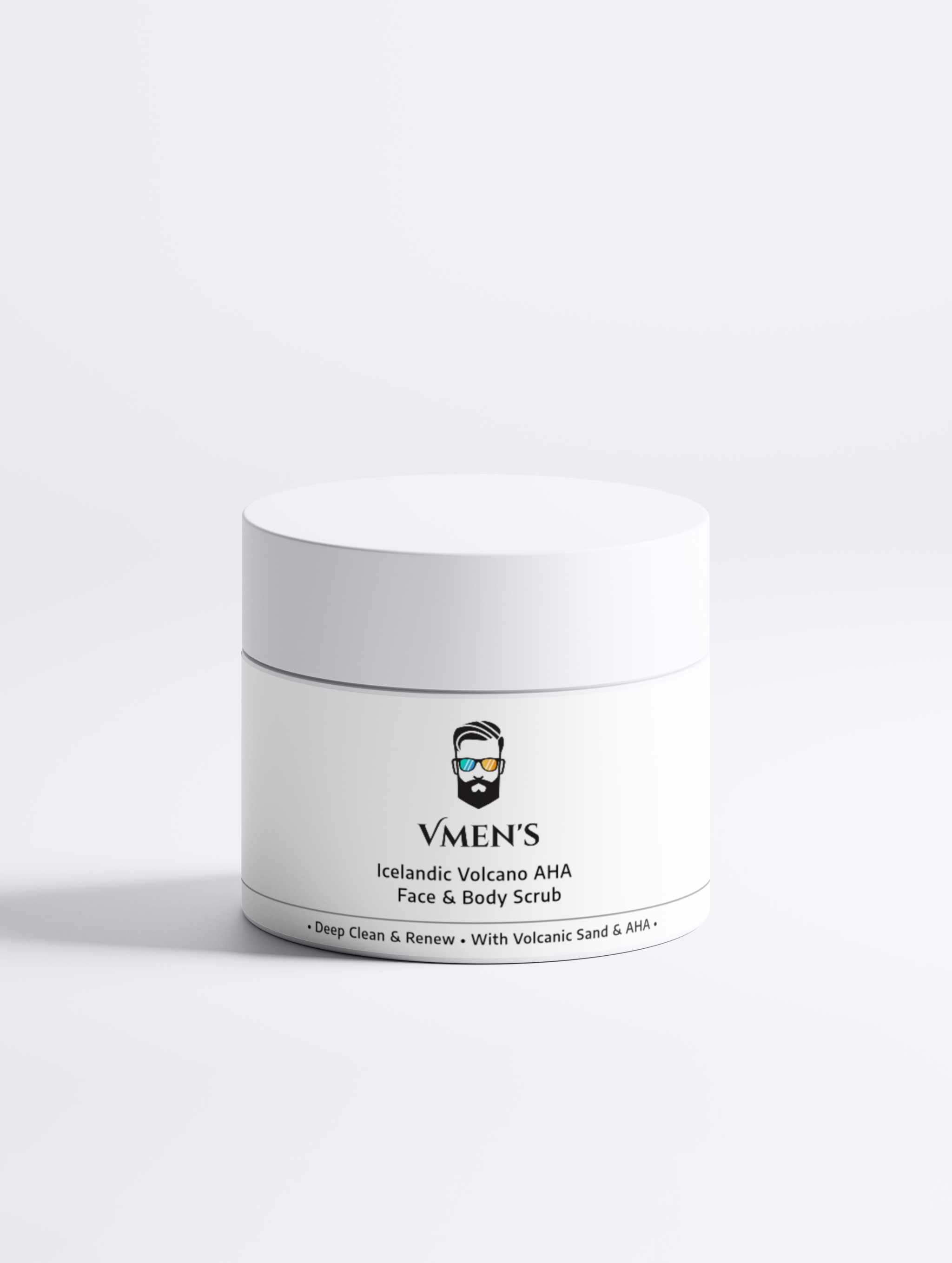
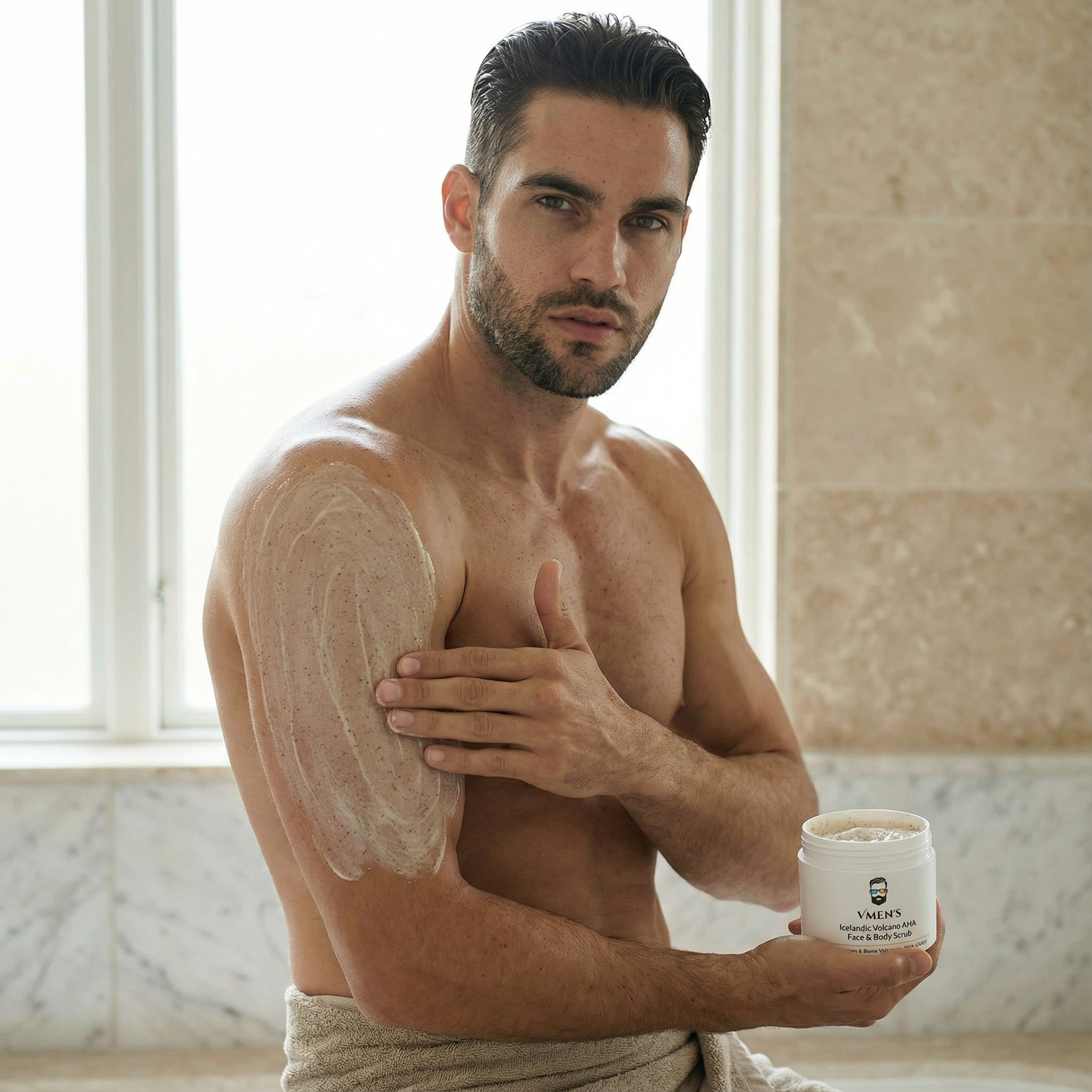
2. Physical Exfoliation: Volcanic Face Scrub
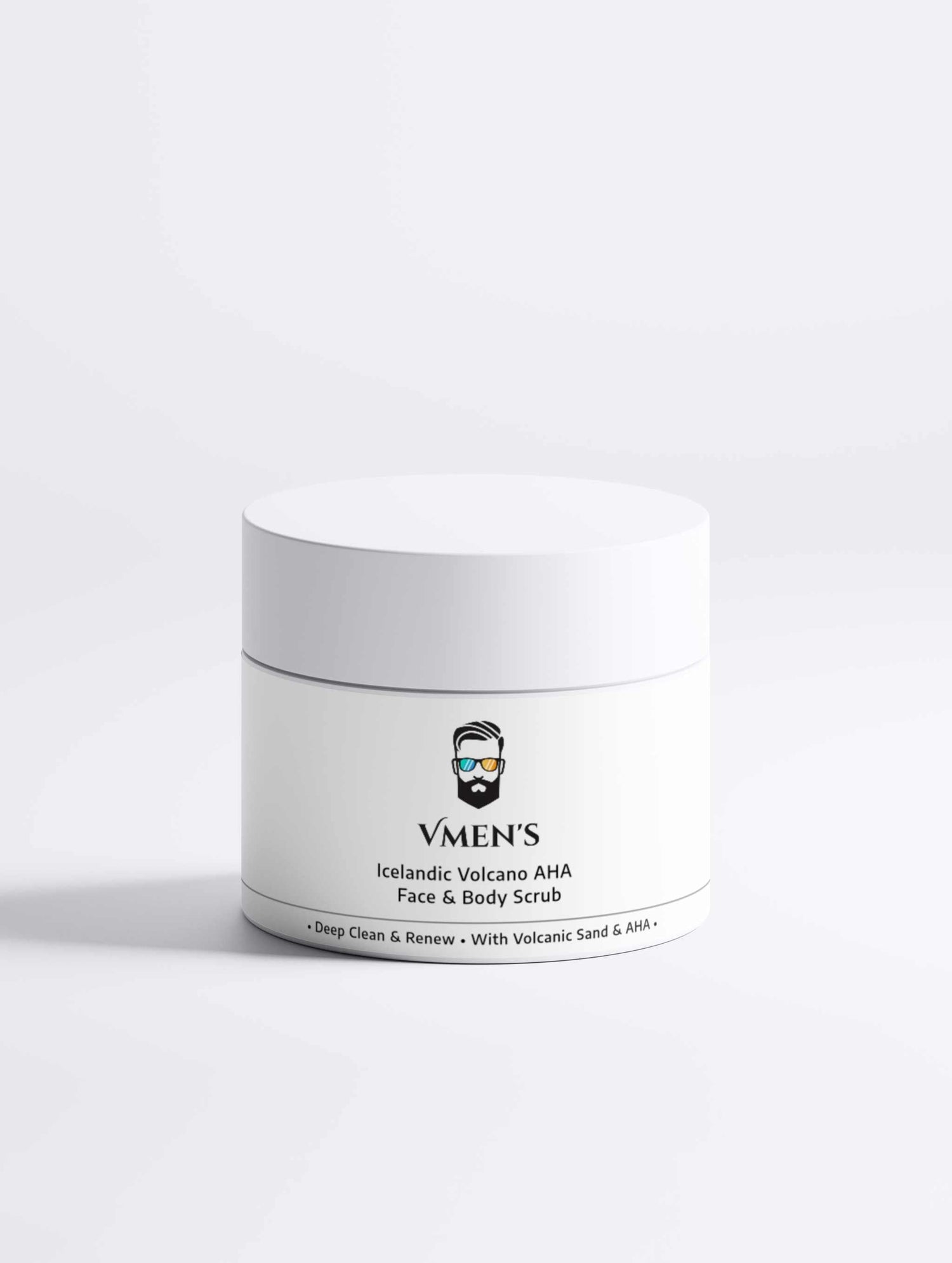
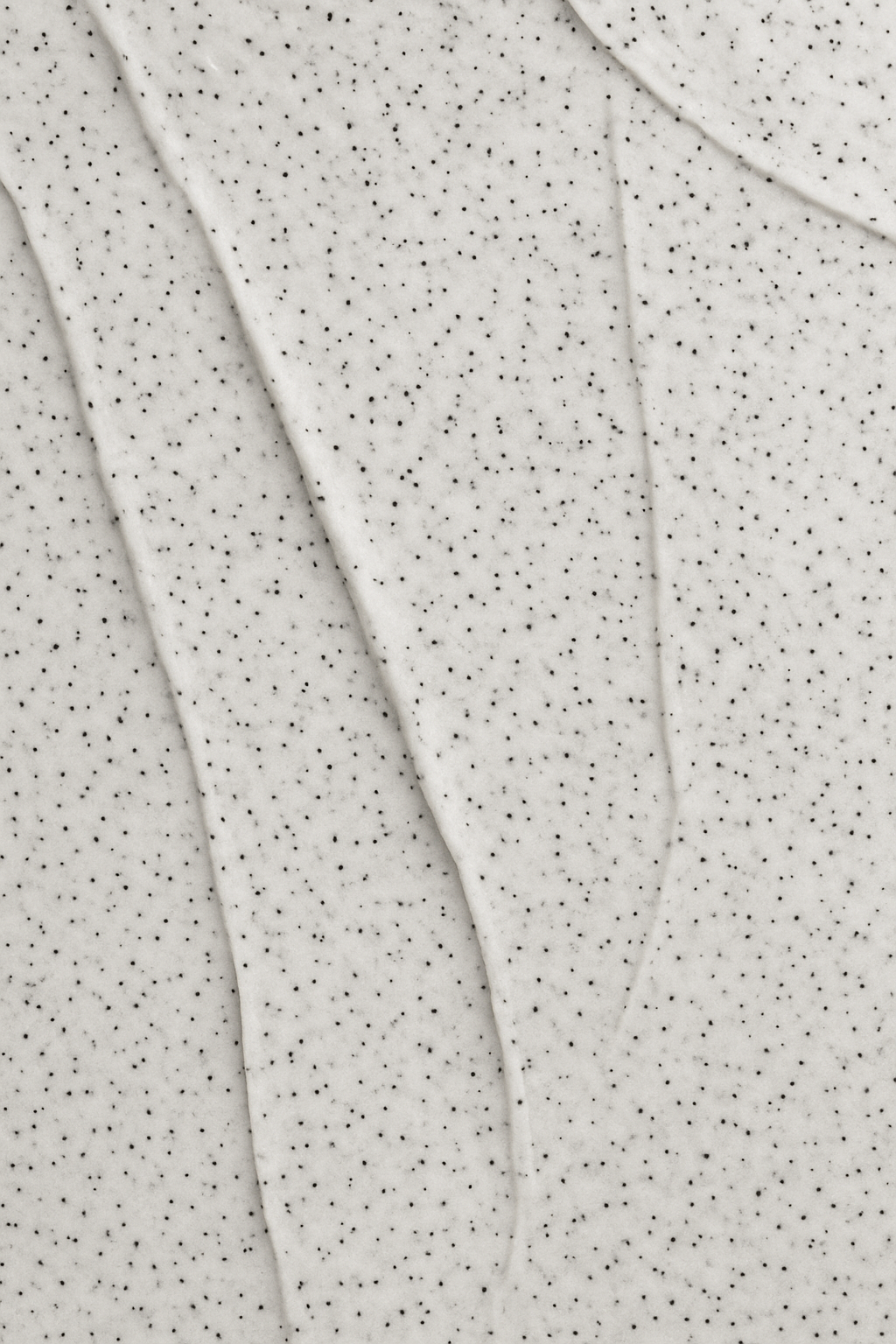
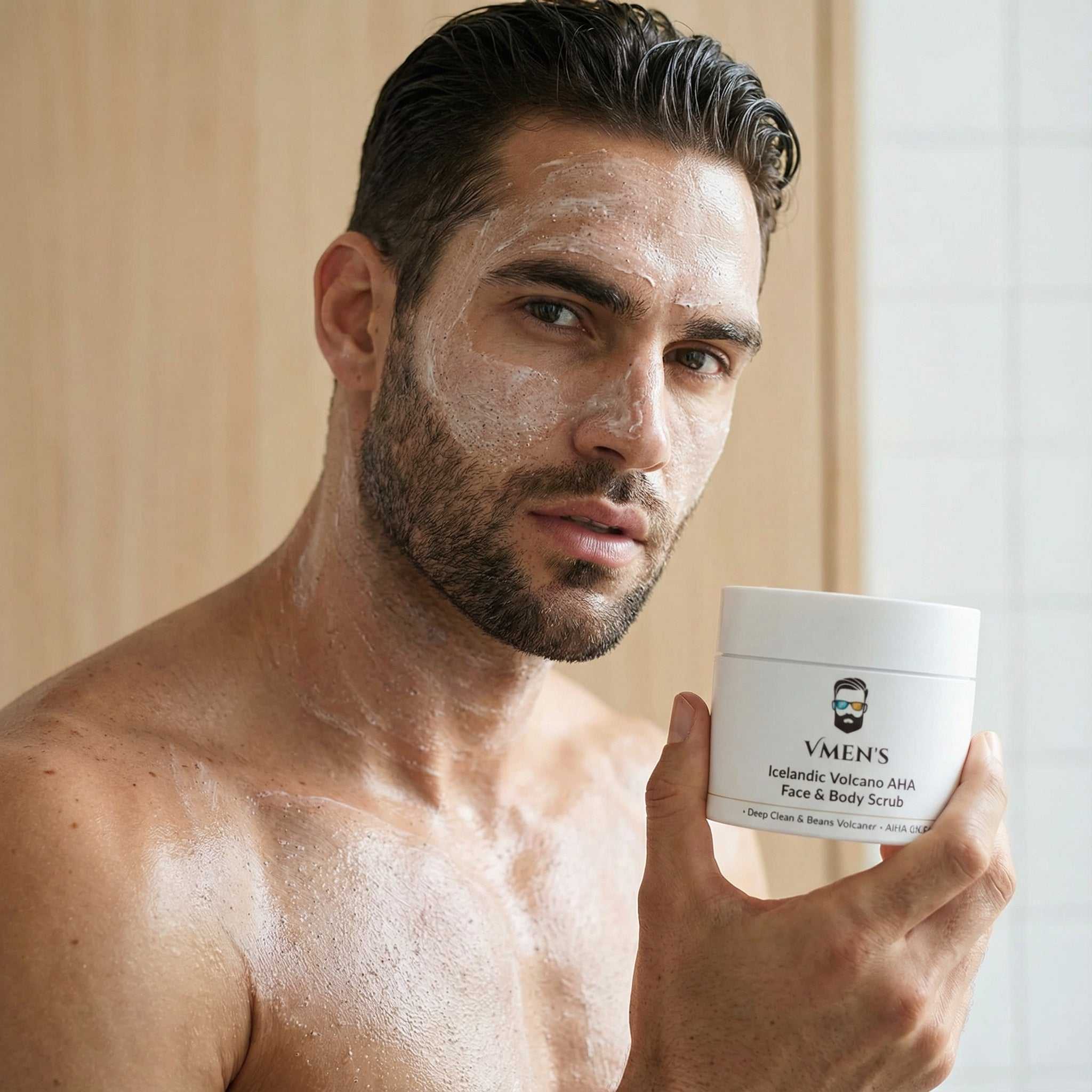
A physical exfoliator removes dead skin manually through fine exfoliating particles. A volcanic face scrub is especially useful for men because it helps lift buildup from the skin surface while also addressing texture around the beard area.
This type of exfoliation gives a more immediate smooth-skin feel and can be a good fit for men who like a direct, tactile cleansing experience.
- Helps remove rough surface buildup
- Can support a deeper-clean feel
- Useful around beard-prone zones
- Ideal for men who prefer a scrub texture
AHA Peel vs Volcanic Scrub: Which One Is Better?
Neither is universally better. The right choice depends on your skin goals, your tolerance, and the type of routine you want.
| Product Type | Best For |
|---|---|
| AHA peel | Dull skin, uneven tone, smoother finish, low-friction exfoliation |
| Volcanic scrub | Rough texture, beard-area buildup, deep-clean feel, oily skin |
Many men get the best results by using both, but on different days. That way, you benefit from both surface renewal and manual texture refinement without overdoing it.
How to Exfoliate Properly
Step 1: Cleanse the skin first
Start with clean skin so the exfoliating product can work properly. Explore the VMEN’S face collection for men’s facial skincare essentials.
Step 2: Apply your exfoliating product
If you are using an AHA peel, apply it according to the product directions and avoid combining it with multiple strong actives on the same day.
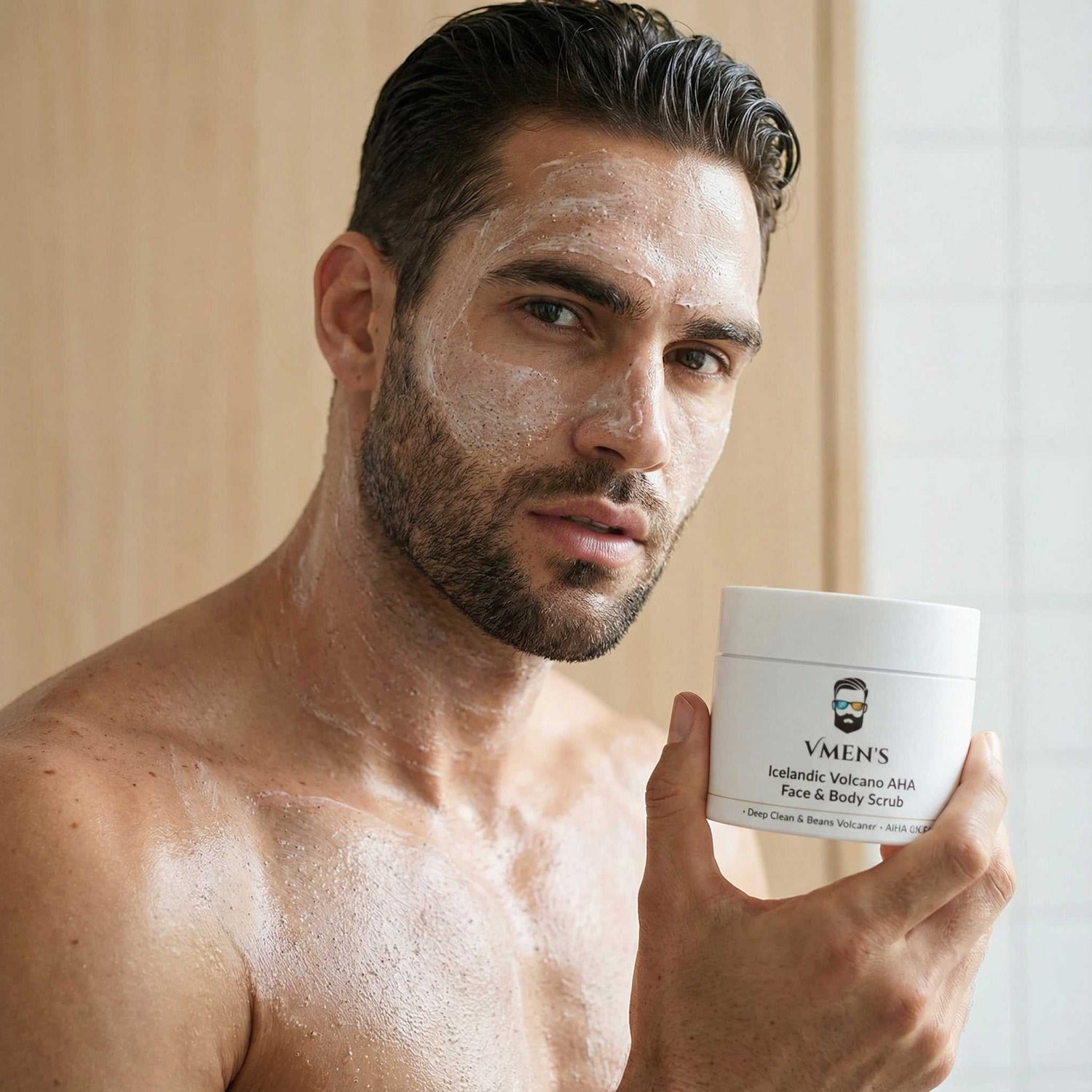
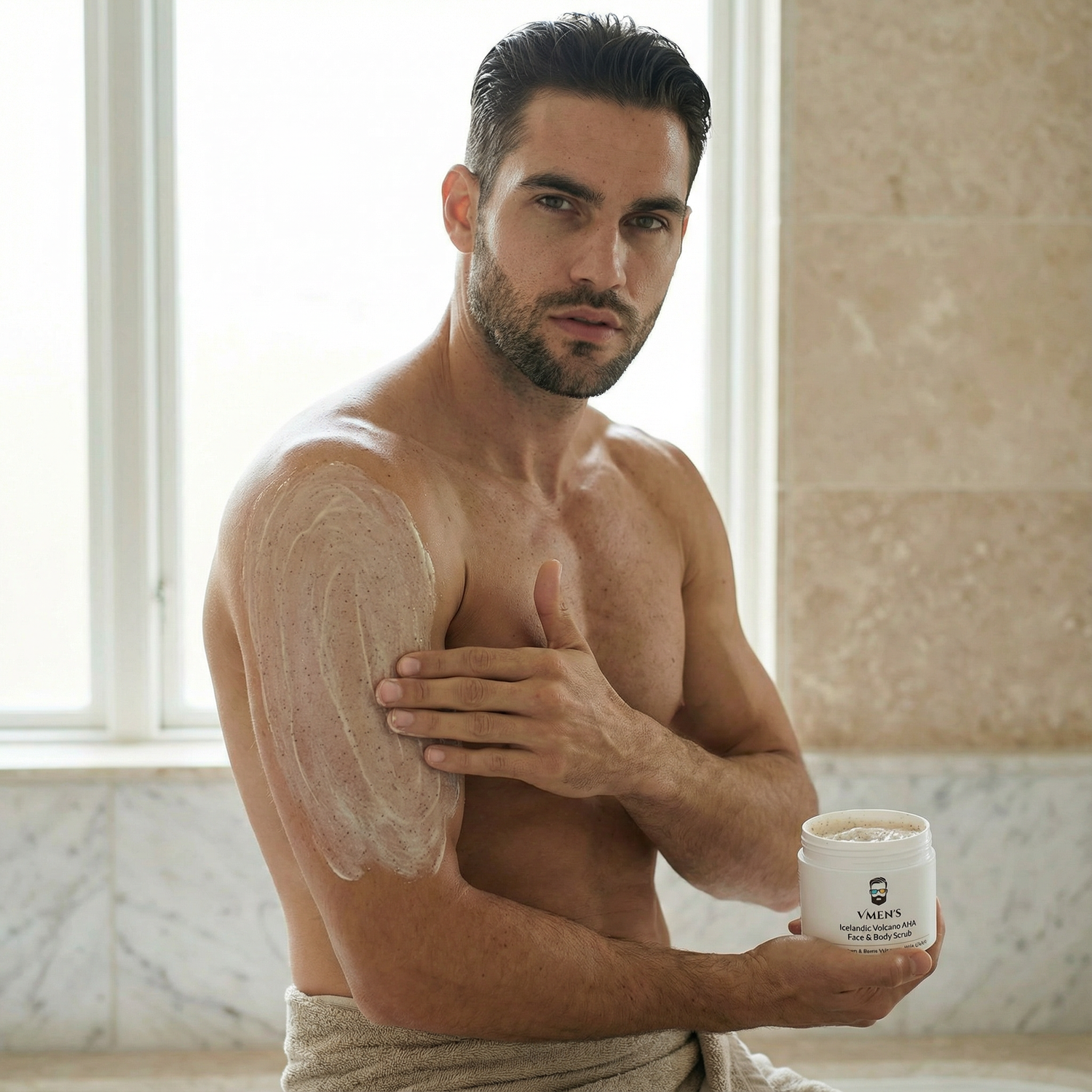
If you are using a volcanic scrub, massage gently into damp skin for around 30 to 60 seconds. Avoid pressing too hard.
Step 3: Rinse with lukewarm water
Keep the skin calm after exfoliation. Hot water can leave skin feeling more stressed or dry.
Step 4: Apply a serum
After exfoliation, the skin is usually more receptive to follow-up care. Explore the VMEN’S serums collection to support hydration, barrier care, and smoother-looking skin.
Step 5: Finish with moisturiser
This step helps support the skin barrier and keeps the skin comfortable after exfoliation. You can also browse the full men’s face skincare range for daily-use products.
Common Exfoliation Mistakes Men Make
- Exfoliating every day
- Scrubbing too aggressively
- Using exfoliation on already irritated skin
- Skipping moisturiser afterwards
- Using too many strong active products in the same routine
Signs Your Skin May Need Exfoliation
Your skin may benefit from regular exfoliation if you notice any of the following:
- Skin looks dull or tired
- Texture feels rough or uneven
- Pores look congested
- You get buildup around the beard area
- Serums and creams do not seem to absorb well
Explore VMEN’S
Build a Smarter Men’s Skincare Routine
Discover performance-focused skincare for men, including facial care, exfoliation support, and serums designed for daily use.
FAQ
Exfoliation for Men: Common Questions
Should men exfoliate every day?
No. For most men, 1 to 2 times per week is enough. Daily exfoliation can be too much and may irritate the skin.
Is AHA or a scrub better for men?
It depends on your needs. AHA is often better for dullness and smoother texture, while a scrub can be useful for rough skin and beard-area buildup.
Can exfoliation help with ingrown hairs?
Yes. Proper exfoliation can help reduce buildup around hair follicles, which may improve the appearance of ingrown-prone areas.
What should I use after exfoliating?
Use a serum followed by a moisturiser. This helps support hydration and keeps the skin barrier balanced after exfoliation.